

Do soap flower heads have antibacterial properties?
Aug 27, 2025
Leave a message
Hey there! As a supplier of soap flower heads, I often get asked if these beautiful little things have antibacterial properties. It's a super interesting question, and today, I'm gonna dig deep into this topic to give you all the info you need.
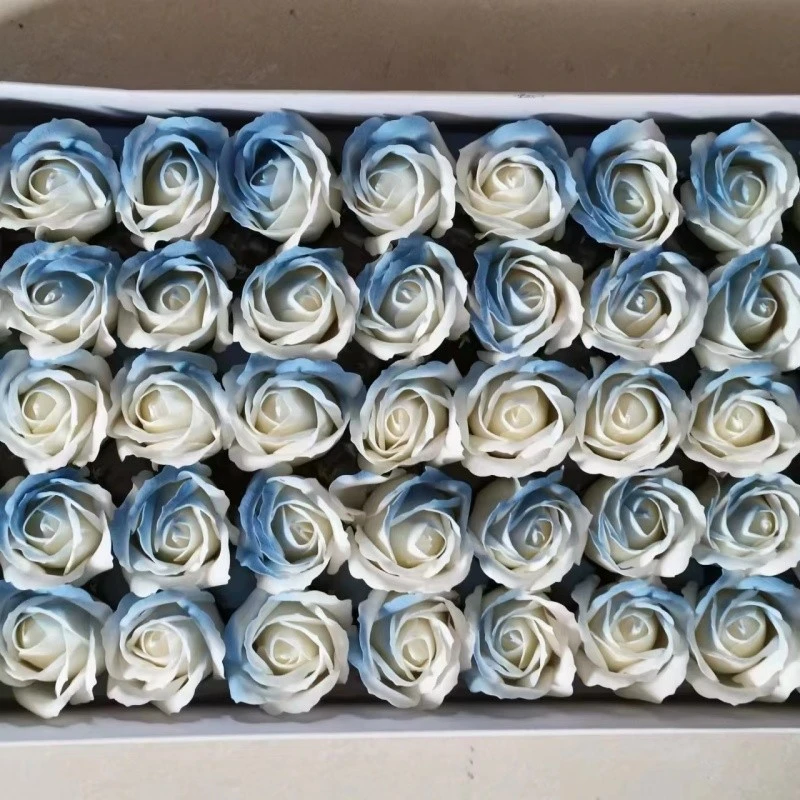
First off, let's understand what soap flower heads are. They're these cute, flower - shaped soap products that are not only aesthetically pleasing but also serve the purpose of cleaning. You can find various types, like the Three - Layer Soap Flower, the Three - Layer Thickened Soap Flower, and the adorable Bear Rose Soap Flower. These soap flowers are made from different ingredients, and that's where the story of their antibacterial properties begins.
Most soap flower heads are made with common soap - making ingredients such as fatty acids and alkalis. When these two react, they form soap through a process called saponification. Now, regular soap has been known to have some antibacterial capabilities. How does it work? Well, soap molecules have a unique structure. One end of the molecule is attracted to water (hydrophilic), and the other end is attracted to oils and fats (hydrophobic). When you wash your hands or any surface with soap, the hydrophobic end attaches to dirt, oil, and bacteria, while the hydrophilic end attaches to water. As you rinse, the soap molecules pull the bacteria and dirt away from the surface and into the water, effectively removing them.

However, the antibacterial power of regular soap is mainly about physical removal rather than killing the bacteria. It's like taking the bacteria for a ride down the drain. But some soap flower heads might have additional ingredients that can actually kill bacteria. For example, some manufacturers add essential oils to their soap flowers. Essential oils like tea tree oil, lavender oil, and eucalyptus oil are known for their antibacterial properties.
Tea tree oil has been studied a lot for its ability to fight off bacteria. It contains compounds like terpenoids that can disrupt the cell membranes of bacteria, leading to their death. Lavender oil, on top of its lovely smell, also has antibacterial effects. It can inhibit the growth of certain bacteria, especially those that cause skin infections. Eucalyptus oil, with its refreshing scent, has been shown to have antibacterial activity against a wide range of bacteria, including some that are resistant to antibiotics.
But here's the thing. Just because a soap flower head has essential oils doesn't mean it's a super - powerful antibacterial weapon. The amount of essential oil in the soap matters. If the concentration is too low, the antibacterial effect might be negligible. Also, the stability of the essential oils in the soap can be an issue. Over time, essential oils can evaporate or break down, reducing their antibacterial potency.
Another factor to consider is the type of bacteria. Different bacteria have different levels of resistance. Some bacteria are more easily removed or killed by soap and essential oils, while others are more stubborn. For example, gram - positive bacteria have a thick cell wall made of peptidoglycan, which can make them more resistant to some antibacterial agents. Gram - negative bacteria, on the other hand, have an outer membrane that can act as a barrier, protecting them from certain substances.
So, when it comes to our soap flower heads, it's important to look at the product label. If it lists essential oils or other antibacterial ingredients, that's a good sign. But don't expect it to work miracles. It's still a good idea to follow proper hygiene practices, like washing your hands for at least 20 seconds, especially during times when there's a high risk of getting sick.
Now, let's talk about testing. To really know how well a soap flower head can fight bacteria, proper testing needs to be done. Some manufacturers conduct laboratory tests to measure the antibacterial activity of their products. They use techniques like the disk - diffusion method, where a small disk soaked in the soap solution is placed on a culture of bacteria. If the soap has antibacterial properties, there will be a clear zone around the disk where the bacteria don't grow.
But not all soap flower head suppliers do these tests. As a supplier, I understand the importance of transparency. That's why we make sure to be clear about the ingredients in our soap flower heads. We also encourage our customers to do their own research and make informed decisions.
In the end, our soap flower heads can offer some level of antibacterial protection, especially when they have the right ingredients. But they're not a substitute for proper hygiene and medical advice. Whether you're using them for personal use or as a gift, they can be a great addition to your cleaning routine.
If you're interested in our soap flower heads, whether it's the Three - Layer Soap Flower, the Three - Layer Thickened Soap Flower, or the Bear Rose Soap Flower, we'd love to have a chat with you about your procurement needs. Reach out to us for more details and let's start a great business relationship!
References
- “Antibacterial Activity of Essential Oils and Other Plant Extracts.” Journal of Applied Microbiology.
- “Soap and Sanitizer: How They Work to Keep You Clean and Healthy.” Centers for Disease Control and Prevention.